
The problem we thought we had: prices are too high
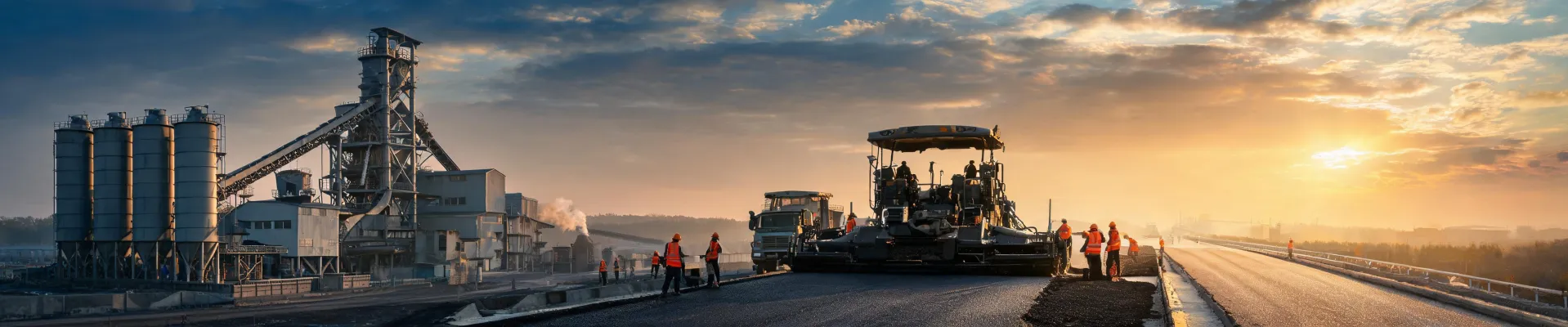
When I took over purchasing in 2021 for a 120-person construction company, I thought my main job was to get the lowest quote. We buy everything from motor graders to concrete pumps—roughly $2.5 million annually across 10 vendors. I report to both operations and finance. So when a project manager asked for a new asphalt plant, I did what any cost-conscious admin would do: I collected three bids and picked the cheapest.
That plant broke down in week two. The replacement part took 11 days. We lost a $40,000 paving contract because we couldn't meet the deadline. That’s when I realized the question everyone asks is "What's your best price?" The question we should ask is "What's included in that price—and what happens when it breaks?"
The deeper cause: we're buying specs we don't understand
Here's the thing about equipment procurement: most of us in administrative roles aren't engineers. We rely on vendor reps to tell us what we need. That's a mistake. I've learned that the specs matter more than the sticker price. For example, when we sourced a motor grader, I had no idea that blade down-pressure, moldboard width, and articulation type would affect how well it handles our specific soil conditions. We ended up with a machine that couldn't do the job, and we had to rent a replacement for three months.
I've also made the mistake of treating all suppliers as interchangeable. If a dealer sells asphalt plants, crushers, pavers, and concrete pumps, I assumed they were experts in all of them. They're not. The vendor who said "this isn't our strength—here's who does it better" earned my trust for everything else. That's the expertise boundary: a specialist who knows their limits beats a generalist who overpromises.
Take paver specifications. When we looked at a new paver, I didn't know to check the hopper capacity, auger diameter, or whether it could handle warm mix asphalt. We just looked at the price. The paver we bought couldn't maintain consistent depth on our steep grades. The fix cost us $12,000 in rework and a lot of overtime. Now I always pull the manufacturer's spec sheet—and I compare it to what we actually need, not what the sales rep says we need.
Same with concrete pumps. I used to think a pump was a pump. But when we had a breakdown on a foundation pour, I learned that what to look for in a concrete pump supplier is parts availability, service network, and training. Our low-cost supplier had no local parts stock. We waited five days for a $200 valve. The project delay cost us $8,000 in labor and equipment rental. That's the hidden cost of a cheap bid.
And yes, I've checked the Astec Industries official website (astecindustries.com) when we were considering an Astec asphalt plant. Their site lists throughput capacities, emission compliance, and component details. It's a starting point. But the real lesson is that I need to do that homework before I talk to any vendor—because if I don't know the specs, I can't tell if a bid is low because it's efficient or because it's missing something.
The cost of getting it wrong
Let's talk about the real cost. When a critical machine goes down, it's not just the repair bill. It's the idle crew, the delayed project, the penalty clauses, and the emergency rental. We once had a screening plant fail during a peak season. The part was backordered for two weeks. We rented a replacement for $3,500 per week. That's $7,000 we didn't budget for—plus the $15,000 penalty for missing the deadline.
I've also seen the flip side. A colleague chose a slightly more expensive paver because the dealer had a local service tech and guaranteed parts within 24 hours. That paver cost $8,000 more upfront. But it never went down for more than a day. Over three years, that $8,000 saved them at least $20,000 in downtime. The lowest quoted price often isn't the lowest total cost.
To be fair, I get why people go with the cheapest option—budgets are real. But the way I see it, equipment is different from office supplies. A bad printer is annoying. A bad asphalt plant stops your entire operation.
How I source equipment now (the short version)
I don't have a perfect system, but I've stopped making the same mistakes. Here's what works for me:
- Start with the specs, not the price. For a paver, I look at paver specifications like paving width, speed, and emission tier. For a motor grader, I check blade size, engine horsepower, and whether it can handle our typical grading jobs. For an asphalt plant, I want to know the throughput, burner type, and emission controls. I use the manufacturer's official website—like Astec's—to get baseline data.
- Ask about parts and service. For concrete pumps, I now ask: Where's your nearest parts warehouse? What's your average response time? Do you offer training? If they hesitate, that's a red flag.
- Look for a specialist, not a supermarket. A dealer who focuses on motor grader sourcing or asphalt plants will know more about those machines than a dealer who sells everything. I'd rather work with a specialist who knows their limits than a generalist who overpromises.
- Calculate total cost of ownership. That includes purchase price, setup, training, expected maintenance, parts availability, and resale value. I use a simple spreadsheet. It's not perfect, but it's better than guessing.
The upside of doing this work is fewer emergencies. The risk is spending more time upfront. I kept asking myself: is the extra research worth potentially avoiding another $10,000 downtime? In my experience, yes. Every time.
The bottom line
If you're an administrative buyer like me, you don't need to be an engineer. But you do need to know what you're buying. Don't just compare prices. Compare specifications, parts networks, and service reputations. And when a supplier says "we don't do that—here's who does," listen. That's not weakness. That's expertise. And it's the kind of partner you want when a breakdown would cost you more than the machine itself.