Tier 4 Final Burner Packages
Documented NOx and PM logs for dual-fuel burners sized to continuous drum duty, not brochure horsepower claims.

Cold-feed bins, parallel-flow drum length and baghouse CFM documented against aggregate moisture — so paving crews hit target mix temperature without guessing burner setpoints.
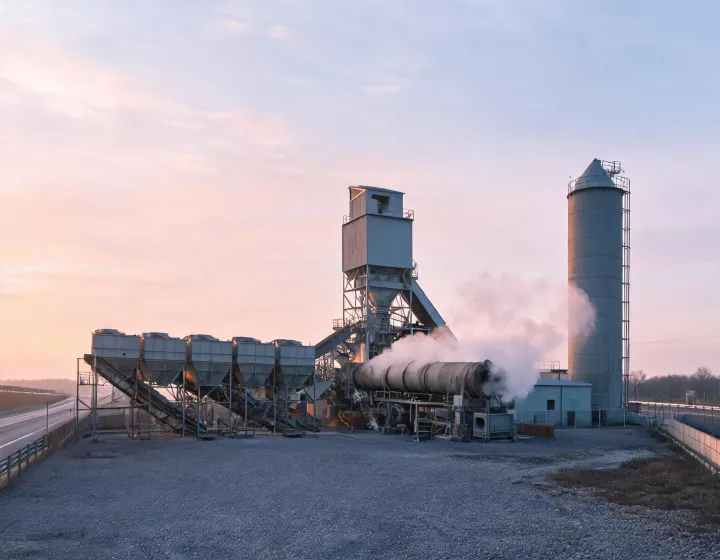
Grouped parameters plant managers and paving estimators verify before locking drum diameter, baghouse media and silo storage for a season of highway or municipal mix.
| Drum diameter | 1.8–2.6 m class-dependent |
|---|---|
| Drum length | 8.5–12.0 m parallel-flow |
| Rated output | 160 / 240 / 320 / 400 t/h |
| Aggregate moisture design | up to 5% without throughput derate |
| Baghouse airflow | 45,000–90,000 CFM |
|---|---|
| Filter media | Nomex / PTFE membrane options |
| Differential pressure | alarm setpoints logged to PLC |
| Stack compliance | EPA / local PM permit packs |
| Burner rating | 40–100 MMBTU/h dual-fuel |
|---|---|
| Control | PLC mix recipe + moisture correction |
| Hot-mix silos | 80–300 t insulated storage |
| Cold-feed bins | 4–6 bins with variable-speed belts |
Documented NOx and PM logs for dual-fuel burners sized to continuous drum duty, not brochure horsepower claims.
PLC moisture probes adjust belt speeds so target mix temperature holds when stockpile moisture swings after rain.
Alarm setpoints and media life trends export for environmental audits and filter change planning.
Hot-mix storage designed to limit temperature drop during truck staging on long airport or corridor pours.
Burner nozzles, baghouse bags and drum flights staged so mean-time-to-repair stays under a paving shift.
Guarding, emergency stops and lockout points documented for contractor HSE files before commissioning.
Typical 240 t/h continuous plants ship in 16–20 weeks including foundation drawing review, plus a seven-day on-site commissioning audit covering burner map, baghouse CFM and mix recipe validation.
Dual-fuel burner packages ship with NOx and PM documentation suitable for local air permits; aftertreatment configuration is confirmed against your fuel slate and stack height before fabrication.
We derate drum throughput against design moisture and select baghouse airflow with headroom for rainy-week moisture spikes, then lock filter media to the particulate loading curve.
Yes — cement silo load cells, mixer amperage baselines and admixture pump calibration follow the same field checklist language as asphalt plant startups.
Plant hydraulic circuits for gates and silo valves ship with ISO 4406 sampling ports; we recommend 18/16/13 cleanliness before seasonal restart after winter layup.

Layout review, burner map and baghouse media selection in one engineering conversation before steel is cut.
Talk to a Plant Engineer