
I think most wholesale buyers choose a paver in the wrong order.
They start with the machine. Screed width, horsepower, hopper capacity, price. Support, parts, power supply, and resale get considered later, if they get considered at all. That method made sense in 2020. In 2026, it leads to expensive inventory that's hard to sell, harder to support, and too dependent on one operator's preferences.
My view: if you're buying asphalt pavers for wholesale, don't start with the paver. Start with the system the paver will live in—the asphalt plant that feeds it, the roller compaction train behind it, the power supply configuration, and the support network that has to keep it running.
This isn't a polished theory. In my current role as equipment sourcing coordinator, I've handled more than 200 urgent equipment requests for contractors and dealers. Last quarter alone, we processed 47 rush orders for asphalt plants, pavers, crushers, and rollers. The machines that save a bad week are rarely the newest or most impressive spec in the yard. They're the machines whose support system is already in place.
Start with the system, not the spec sheet
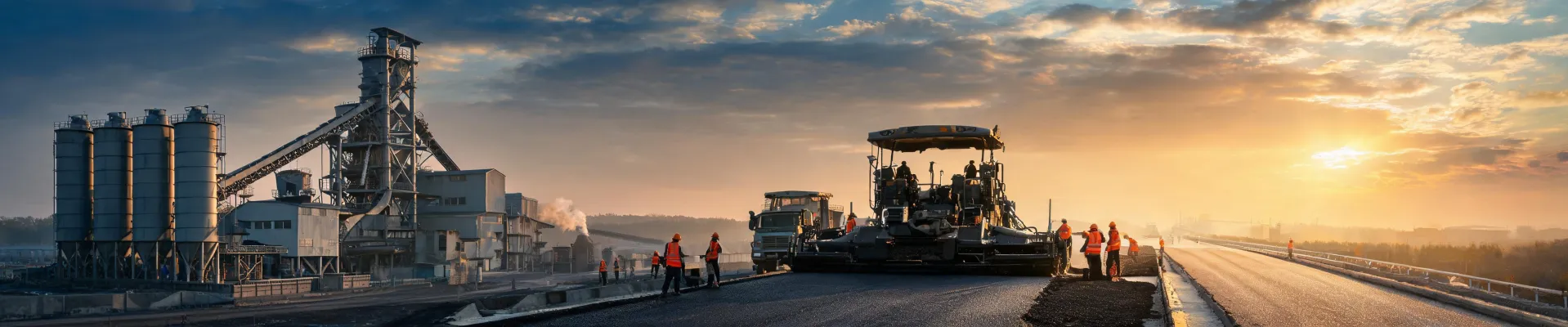
An asphalt paver doesn't pave by itself. It lays material that comes from an asphalt plant, and its work is only finished after the roller train passes over the mat. If the plant can't feed the paver, a wider screed doesn't help. If the roller fleet can't keep up, the paver just builds a bottleneck in front of the compaction crew.
That's why I ask wholesale clients to describe the jobs their end buyers actually run. Do they pave large highway projects with high-tonnage asphalt plants, or do they patch city streets and parking lots? The answer decides paver size and speed better than any brochure. A paver capable of twelve-foot highway work can be a liability on a tight urban street, while a small city paver gets swallowed on an interstate.
Astec's broad product lineup makes this point visible. An Astec asphalt plant isn't the end of a dealer's story; the same manufacturer also offers pavers, compactors, crushing, screening, and grading equipment. When a wholesale dealer thinks in those categories, it's easier to stock machines that belong together.
Choose boring, standardized equipment
Here's where I sound less like a salesman and more like a mechanic: I usually want the boring version.
Custom options feel valuable when you buy a single machine. For wholesale, they create problems. A paver with an unusual screed package, special electrical controls, or a one-off component spec may delight one owner and terrify the next. If you buy ten machines and every one is configured differently, you have to stock more parts, train more mechanics, and explain more exceptions to customers.
Last spring, I went back and forth for a week between two near-identical pavers for a wholesale order. One had a custom screed package and every option on the list. The other was a standard machine that matched what the local market already ran. On paper, the custom paver was better. I chose the standard one because standard means parts availability, familiar controls, and a larger pool of future buyers. I'm still relieved I made that call.
The power supply question is no longer optional
Here's where I often lose wholesale buyers: I bring up power supply before they're ready.
It's not their fault. Most dealers think of power supply as a plant engineer's problem. But asphalt plants are massive electrical loads. An Astec asphalt plant package has to be matched to site voltage, phase, and frequency. If you export a plant or move it into a region with different utility standards, an incorrect power supply spec can idle the plant for weeks while the paver sits in its crate.
I've started asking for the Astec power supply configuration before I plan any shipping. It's saved me more than once. And pavers are moving in the same direction. Electrically heated screeds, advanced controls, telematics, and lighting packages all draw power in ways older machines didn't. When I evaluate an asphalt paver for a wholesale order, I check generator capacity and control platform, not just engine horsepower. A paver with a standard electrical package can fit almost any contractor's operation. A one-off electrical package is a rental problem waiting to happen.
The roller compactor manufacturer belongs in the conversation earlier
I mentioned the compaction train a moment ago. Let me be specific: the roller compactor manufacturer matters even when you're buying an asphalt paver.
Ten years ago, you could treat compactors as separate pieces. Pavers laid the mat; rollers compacted it. Today, paver and roller data can be linked through job telematics. The paver records speeds and mat temperature; the roller records pass counts and vibration settings. When both systems talk to each other, the contractor can adjust the paving operation in real time. When they don't, you're back to matching paper printouts and hoping the math works.
I don't say this to push a one-stop shop. I've bought used equipment from other manufacturers in an emergency, and that was the right call at the time. For a wholesale plan, though, repeatability matters more than one great deal. If the roller compactor manufacturer, the paver maker, and the local dealer can support the same workflow, your customers spend less time learning new systems and more time earning revenue. That pattern builds resale value.
So here's how to choose a paver for wholesale
The objection I hear most often is, 'I don't need everything to come from one family. I buy what my customers ask for.' That's fair. Wholesale buyers can't always control the order book, and sometimes the right machine is the one available right now.
But the next machine you choose should move your fleet toward standardization, not away from it. Buy the paver that fits the plants, rollers, and support network you already have. If you're building a fleet from scratch, keep the electrical and control architecture as consistent as possible. The profit in wholesale equipment isn't only in the first sale. It's in every service call, every parts lookup, and every future trade-in decision.
So, if you're asking me how to choose a paver for wholesale in 2026, here it is: choose the system first. Then choose the paver. Buy the most standard configuration that still does the work. That will give you fewer 2 a.m. service emergencies, better parts availability, and a much stronger resale story. I'll take that over the widest screed in the yard any day.
One caveat: what I've seen as of April 2026 is already shifting. Availability, incentive programs, and model-level specs change quickly in heavy equipment. Verify current configurations with your dealer before you commit.