
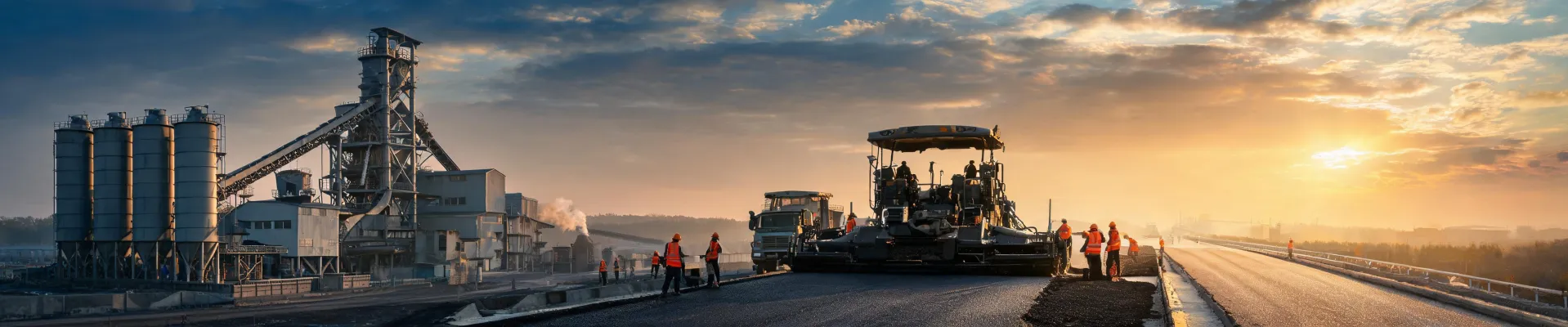
If you are trying to decide whether an Astec asphalt plant is worth the price premium, here is my direct answer: buy the iron and the support package at the same time, and compare the total as one number. In my cost tracking, a lower-priced competitor plant cost 13% more per operating hour over three years than a better-supported Astec plant that was 7% more expensive on the initial quote. The big exception is a bulk motor grader purchase, where volume discounts can hide specification mismatches that no support plan can fix.
This piece explains the reasoning, then the places where it doesn't apply. If you need the short version, the first paragraph is the short version.
Who's giving you this advice
I oversee equipment procurement for a 55-person asphalt paving and sitework contractor. For eight years I've managed a $2.2 million annual equipment budget, negotiated with more than 40 vendors, and recorded every quote, invoice, repair, and resale in our cost tracking system. That system is the source of the numbers I use here.
This isn't a dealer pitch. I'm measured by what equipment costs after it arrives, not by how the purchase order looks.
Start with the plant, not the machine
If you are budgeting for an Astec asphalt plant, don't start your spreadsheet with the maximum production number. Start with planned operating days and the cost of one day with the plant down. A plant that sits for a week during paving season can wipe out a 5% price advantage in a single invoice.
In Q2 2025, I had three vendors quote a comparable mobile plant. The sticker prices had an 18.6% spread. After I added freight, commissioning support, operator training, and a list of critical wear parts, the spread fell to 5.1%. The highest sticker price wasn't the highest total cost. The vendor that looked expensive on page one had the most complete package on page two.
If you're searching for 'astec sterling il' because you found the Astec facility in Sterling, IL, use that as a starting point, not an ending point. The factory of origin matters. The local parts and service location matters more. I once accepted a verbal promise that parts were regional. They weren't. I still kick myself for not asking for a parts stocking list in writing. That mistake cost us four days of downtime and a rental bill we couldn't recover.
Ask the same question with any Astec quote: which facility built the machine, which warehouse supports your ZIP code, and which technician answers the phone after warranty expires. Get the answer in the contract, not in a sales email.
Asphalt paver sourcing: buy the screed, not the brochure width
Most asphalt paver sourcing advice starts with maximum paving width. I've learned to start with the screed. A paver can have a wide mat and still produce a poor mat if the screed package doesn't match your mix, RAP content, and grade-control needs.
In 2022, we spec'd a paver exactly that way. The width number was great. The first season wasn't. (That's a polite way of saying we spent a lot of money learning what the dealer told us in the kickoff meeting.) The machine wasn't the problem. The missing screed options were the problem.
When you ask dealers to quote an asphalt paver, send the same blank specification sheet to all of them. Require the screed model, extensions, automatic grade and slope system, material transfer setup, and training. A one-line quote isn't a quote; it's a placeholder. On the Astec side, Roadtec pavers are often the natural fit with an Astec asphalt plant. But that fit only helps if the dealer can show parts and service history for the exact screed you're buying.
What a roller wholesale cost guide should really give you
When people ask me for a roller wholesale cost guide, they usually want one number. I don't have a number that will be honest for you. Roller prices move by configuration, freight lane, and deal timing. What I can give you is the cost model I use when I compare rollers.
- Total cost per operating hour: purchase plus freight plus setup plus maintenance plus fuel minus resale, divided over planned hours.
- Critical parts availability: ask how many drum bearings, water pumps, and vibratory valves are in the local warehouse.
- Service access: when the dealer's technician does arrive, what's the response-time commitment and hourly rate?
- Drum durability: heavier components normally cost more on day one and less over a five-year life.
Here's the counterintuitive part: the more expensive roller can be the cheaper machine. In 2024, we compared two double-drum rollers. The lower-priced model needed a drum bearing repair at 1,450 hours. That repair plus the downtime cost more than the $8,700 we saved on the original quote. The higher-priced model is still running and still has a better expected resale number. That, not the vague wholesale price list, is what a roller wholesale cost guide should do.
Bulk motor graders: where I get conservative
Now the exception from the first paragraph. If you need five motor graders, the most natural thing is to negotiate one bulk motor grader order. The discount is real. But a volume deal is often built around one base configuration, and the grade-control system, blade options, and cab setup are where specs diverge.
In 2023, we bought five graders as one bulk lot because the price looked great. Then we had to retrofit three units with different grade-control gear for the sites they were assigned to. The retrofits cost more than the bulk discount. My procurement policy now says: negotiate the volume price on a common platform, but price each machine's options individually before you sign, not after.
People assume bulk pricing and standardized fleets are the same thing. They're not. Standardization saves money in parts and training. Bulk pricing saves money on the initial invoice. Combine them only if the spec sheet is correct before the purchase order goes out.
A 30-minute pre-buy verification
Prevention is the cheapest insurance I have. Five minutes of verification before signing beats five days of waiting for a part. Here is the list I use before an equipment order commits us:
- Get the quote against a written spec sheet, not a brochure model number.
- Ask for the factory of origin and the parts warehouse location in writing.
- Ask who provides after-warranty service and what the response commitment is.
- Add operator training to one line. If training isn't included, budget for it.
- Build the TCO model with your expected hours and resale date. Don't use a dealer's generic resale forecast.
When my advice falls apart
This approach worked for us because we keep machines for a long time and have predictable paving seasons. Your mileage may vary if you're buying for a single 12-month project, if you're in a remote area with a thin dealer network, or if cash flow forces you to focus on the lowest first payment instead of the lowest lifetime cost.
If your exit plan is under two years, look hard at rental or used equipment. I'm not against used. Some of our best purchases were used machines with one good season left in them. The point is to match the purchase structure to the work, not to the paint color.
People think Astec's resale value is automatic because of the badge. It isn't. Resale follows parts availability and buyer familiarity. If you're in a market where Astec support is weak, the badge won't protect the resale number. Buy the machine for your region, not for the internet's opinion.