
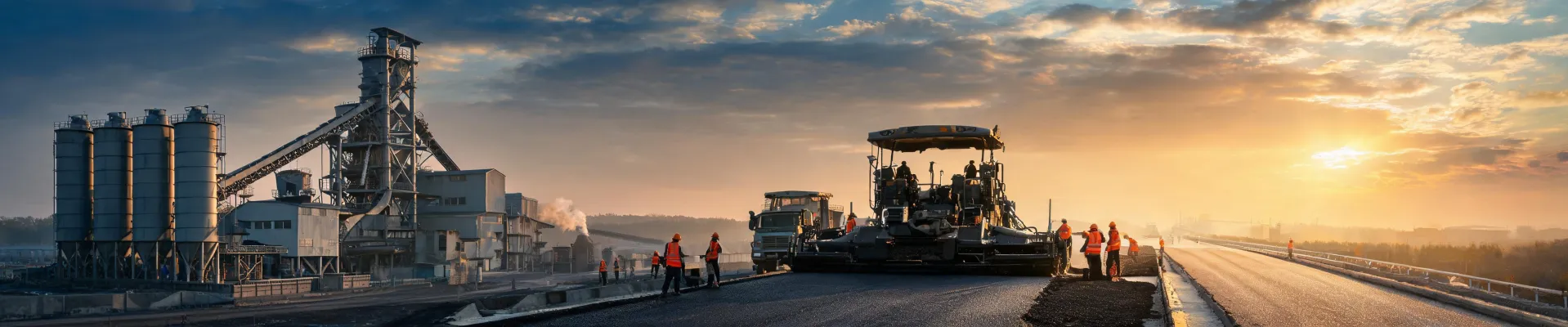
Here’s the honest answer: there’s no single “best” Astec machine for everyone. The right choice depends on your operation, your cash flow, and how long you plan to keep it. Astec’s product lineup covers asphalt, crushing, screening, paving, compaction, concrete, and grading equipment. That breadth is an advantage, but it also makes the “which machine?” question harder.
I’m a procurement manager at a 45-person heavy equipment dealer. I manage roughly $2.8M in annual equipment and parts spend, and I’ve been tracking every order in our cost system since 2019. I’ve negotiated asphalt paver distributor agreements, priced out Astec asphalt plants, and spent too many Tuesdays in rental lots. So before you read another spec sheet, let’s talk about the number that actually matters: total cost of ownership.
Why TCO Beats Sticker Price When Buying Astec Equipment
It’s tempting to think you can compare two quotes and pick the lower number. But identical specs from different vendors can result in wildly different outcomes once freight, setup, training, parts availability, and downtime enter the equation.
TCO = purchase price + freight + installation + training + parts + maintenance + downtime − resale value
Astec equipment tends to hold its value well, especially asphalt plants and pavers. That’s a procurement observation, not a sales pitch. Strong resale value changes the math. I’d rather buy a $180,000 paver that resells for $120,000 after five years than a $150,000 paver that resells for $60,000. The first one is actually cheaper to own.
Also, the “always get three quotes” advice ignores the transaction cost of vendor evaluation and the value of an established relationship. If a distributor has already supported you through two breakdowns, their third quote is worth more than a stranger’s first quote. Trust me on this one.
Three Buyer Scenarios—and What Each Should Look For
No single playbook works for every buyer. These are the three situations I run into most often, and how each one should approach Astec equipment.
Scenario 1: You’re a Contractor Buying for a Specific Project
If you’re buying a road roller for one highway job, the spec sheet should fit that job. I want to say the biggest mistake in this scenario is over-buying—picking a 12-ton roller because the neighboring crew had one, then paying fuel and hauling costs for a machine that runs at half capacity.
Here’s what you need to know: rental is often the lower-TCO move for short-term use. To be fair, rental rates look expensive on paper. But once you add storage, insurance, maintenance, and depreciation, a 12-month project can be cheaper with a rental.
If you do buy, buy through an asphalt paver distributor that has local mechanics and parts stock. The paver model matters, but the distributor matters more. One project taught me that the machine can be fine and the lack of local support costs you days. (Should mention: that was a non-Astec unit, but the lesson stuck.)
Scenario 2: You’re a Distributor or Rental House Building a Product Line
This is a different game. You’re not buying for one job—you’re building an offering that needs to generate turns, parts revenue, and repeat customers.
First, get a plate compactor catalog and read it like a supply-chain document. When I review a catalog, I look for part-number consistency, service intervals, and shared consumables. A compactor with a slightly higher spec but a two-week parts lead time will hurt your rental revenue, not help it. A plate compactor catalog should tell you which models share the same engine and vibration cartridge. If it doesn’t, you’re going to stock too many parts.
If you’re wondering how to choose road roller for wholesale, start with your customers’ dominant job sizes, not the biggest model in the range. Wholesale is about inventory turnover. A roller that sits on your lot for nine months is not an asset; it’s a monthly carrying cost.
An asphalt paver distributor agreement is a long-term commitment. Negotiate lifecycle terms, not just unit price: price breaks on parts, warranty labor rates, return policies, and training credits. That’s where TCO is made.
Oh, and don’t ignore digital assets. You’ll need clean spec sheets and photos for your website, or your sales team will lose hours answering the same questions.
Scenario 3: You’re an Asphalt Producer Expanding Capacity
If you’ve ever priced out an Astec asphalt plant, you know the sticker shock. This is a multi-year capital decision with permitting, site work, and installation costs that often dwarf the equipment price.
A used Astec plant can make sense if you have the internal service capacity to handle aging components. I compared a used and new setup a couple of years ago. I want to say the used plant was about $210,000 less, but don’t quote me on the exact number. It needed a burner rebuild and baghouse work. After freight, permits, and three weeks of lost production, the gap closed to around 18%. Still a real saving, but the risk profile was completely different. I kept asking myself: is the savings worth potentially burning three weeks of the paving season?
Personally, I’d rather buy a new Astec plant with a known startup timeline if my operation can’t tolerate downtime. The cost of a delayed season is not on the quote, but it’s a real cost. The Astec plant with the lowest asking price is not always the one with the lowest total installed cost.
New vs. Used Astec Equipment: The Resale Factor
Astec equipment holds value well. But that only works if you buy the right configuration. An unpopular setup has no resale premium. I’d rather buy a slightly older Astec plant with a standard control system than a newer one with custom controls that only three people in the country know how to service.
Same logic applies to compactors. A standard plate compactor will always be easier to sell than a special-order unit. If you’re building a rental fleet, boring is beautiful.
How to Decide Which Scenario You’re In
Here’s the part most guides skip: how do you know which buyer you actually are? Run through these questions:
- Who will use the equipment? Your crew or someone else’s?
- How many hours or tons will it run per year?
- What support infrastructure do you already have—mechanics, parts, technicians?
- What does one day of downtime cost?
- What is your exit plan after year three or five?
If you’re not sure whether you’re Scenario 1 or Scenario 3, look at utilization. Under 40% utilization, renting or buying used usually wins. Over 60%, new starts to make sense. Between 40% and 60% is a gray zone—that’s when you build the full TCO spreadsheet.
Granted, this requires more upfront work. But it saves time when the invoice arrives, and it saves more when the first breakdown happens at 4:30 on a Friday.
Bottom Line
Astec builds serious equipment for serious operations. But serious equipment at the wrong TCO is a bad purchase no matter the logo. Match the machine to your operation, negotiate the support and lifecycle terms, and run the numbers on total cost—not just the purchase invoice.
Take it from someone who has audited six years of spending: the purchase price is the down payment, not the cost. Oh, and write down your assumptions. When a machine breaks, it’s easy to blame the vendor. But if the original calculation assumed zero downtime, the problem was the calculation.