
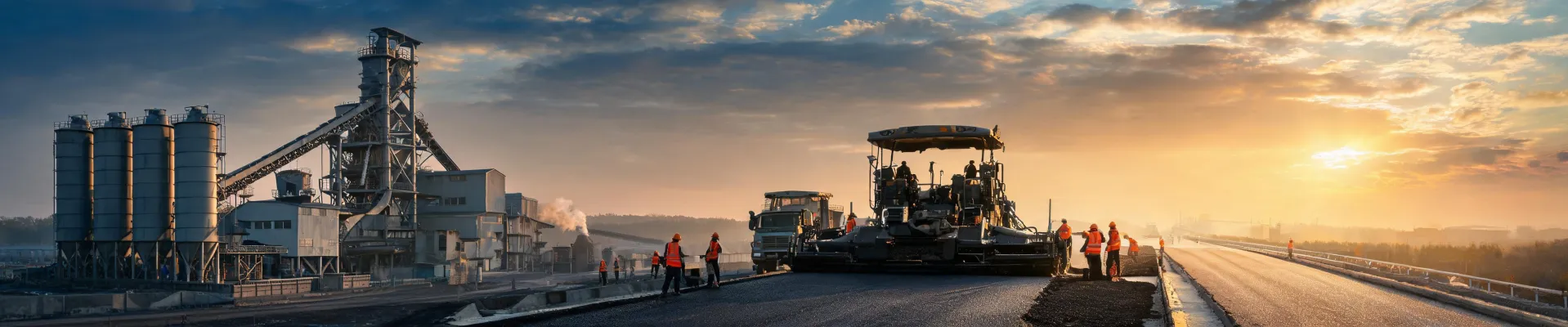
When the Purchase Order Said 'Asphalt Plant' Instead of 'Printer Paper'
I still remember the Tuesday morning when our operations manager knocked on my cubicle wall.
"We need a new asphalt plant," he said, as casually as if he were telling me we were low on toner.
I'm an office administrator for a 380-person construction company. I manage ordering across three states—everything from safety vests and copier paper to the occasional service contract. At the time, I'd been doing this for about twelve years. I'd negotiated with uniform suppliers, managed our fuel card program, and once spent two weeks untangling a billing mess with our waste hauler.
But an asphalt plant? That was outside anything I'd handled.
That was March 2022. Here's what happened next.
The Learning Curve Nobody Warns You About
My first instinct was wrong. I assumed buying heavy equipment worked like buying trucks—get three quotes, compare specs, pick the cheapest one that wouldn't fall apart immediately.
It doesn't work that way at all.
Within the first week, I learned that equipment manufacturers and the dealer networks that support them are two entirely different businesses. A machine's spec sheet tells you almost nothing about whether you'll actually be able to get a replacement part when something breaks on a Friday afternoon in the middle of a paving job.
One dealer walked me through Astec's asphalt plant lineup. I'd heard the name—they're one of the big American manufacturers, known for building equipment that holds up. He mentioned something I didn't know: Astec Industries acquisition activity over the past several years had expanded the company well beyond asphalt into crushing, screening, and other adjacent categories.
That mattered more than I initially realized. When a manufacturer acquires other companies, it can mean better-integrated solutions and broader dealer support. It can also mean growing pains—service quality doesn't always scale as fast as the corporate org chart.
"What most people don't realize is that a manufacturer's acquisition strategy directly affects whether your dealer gets the parts you need in two days or two weeks."
I started paying attention to that stuff. Not just the specs on the machine in front of me—but the health of the network behind it.
The Roller, the Mixer, and the Grader
We didn't just need one machine. We needed a few different pieces for the project, and each one came with its own set of decisions.
The bulk roller compactor was the easiest—or so I thought. Turns out there's a meaningful difference between the brands that dominate the rental market and the ones that hold resale value over a decade. I had no framework for thinking about depreciation. My colleague in operations had to explain it to me twice.
Then came the concrete mixer. Someone suggested we look at concrete mixer wholesale options—buying direct from manufacturers or importers, cutting out the local dealer markup. On paper, the savings looked significant. But here's the thing: it's tempting to compare unit prices in isolation. But the real number is total cost of ownership—and that includes downtime, parts availability, and whether you can get someone on the phone when you're stuck.
We ran the numbers. For our volume, the wholesale route didn't pencil out once we factored in the risk of extended downtime.
But the one that really kept me up at night was the motor grader.
Motor Grader: OEM vs. Private Label
This is where I learned how little I actually knew.
The motor grader OEM vs private label conversation was eye-opening. The private label machines often come from the same factories as the branded ones. The difference usually comes down to dealer support, warranty enforcement, and parts ecosystems.
The price gap can be substantial—I was quoted differences of 25 to 40 percent depending on the configuration.
Here's what I appreciate about the private label option: if you have in-house mechanics and you're comfortable sourcing parts yourself, it can make real financial sense. But if you're relying on a dealer to keep your equipment running during a tight project timeline—well, you're paying for that relationship whether you see it in the line items or not.
I have mixed feelings about this even now. Part of me wishes we'd taken the private label gamble and saved the capital. Another part remembers the time a hydraulic hose on one of our older machines took five days to source because the local dealer didn't stock it. Five days of a machine sitting idle during paving season is a number that sticks with you.
What I'd Do Differently
We ended up going with the Astec plant, a mid-tier OEM roller, and a grader from one of the major brands. The project finished on schedule. Nobody threw a party, but nobody lost their job either.
Looking back, here's what I'd tell anyone walking into equipment procurement from an office background:
- Call the dealer first. I spent two weeks building a spec comparison spreadsheet that one phone call could have made irrelevant.
- Watch the manufacturer's acquisition activity. What was true about a brand's support network in 2020 may not hold in 2025. The industry is consolidating, and that changes what you're actually buying.
- Don't skip the relationship question. Equipment isn't like office supplies. You're not just buying a thing—you're buying a relationship that either works or doesn't when something goes wrong.
I don't have hard data on industry-wide failure rates or dealer response times. I wish I'd tracked that stuff from the beginning. What I can tell you is that in our three years of managing heavy equipment purchases, the transactions that went smoothly were the ones where I understood the full picture—not just the machine, but the network, the acquisition landscape, and the long-term cost of a phone call that nobody answers.
The fundamentals of procurement haven't changed. Do your homework, verify your sources, don't be afraid to walk away. But the execution has transformed. And honestly? It's been a lot more interesting than ordering printer paper.